How did we get to this place?
Published August 6, 2026
By Gary Pearce
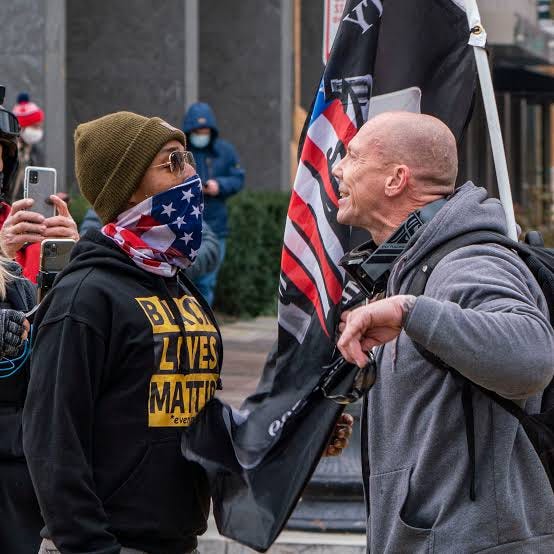
I’m from the 20th Century, and I struggle to understand 21st Century politics.
How did it get so broken?
How did we get so angry at our government, our institutions and each other?
The answer, no doubt, lies in all the traumas and troubles we’ve been through in the first 25 years of this century: 9/11, two endless wars (and now maybe a third), the collapse of manufacturing jobs, growing inequality, the 2008 financial collapse, a recession that never ended for many people, the opioid plague, Covid, shutdowns, raging inflation and roaring political corruption.
This came up recently when Carter Wrenn and I joined a Zoom call with a group of thoughtful people from across the state - veterans of journalism, academia and politics.
As one person on the call said, most of us who grew up in the 20th Century could afford to go to college, pay for health insurance and buy a house.
But, he said, “young people today don’t have the same shot at the American Dream that we did.”
Earlier this year, a statewide poll I worked on asked this question:
“When today’s children in North Carolina grow up, do you think they will be better off than people are today, worse off or about the same?”
56% said worse off.
I was shocked.
56% - a majority of North Carolinians - believe things will be worse for their children and grandchildren in the years ahead.
Only 10% - just one person in 10 - said “better off;” 19% said “about the same” and 15% weren’t sure.
In the same poll, we asked:
“Would you say the 21st century, the years 2001 to 2025, have been mostly a success or failure?”
Only 13% said success; 40% said failure and 34% said neither; 13% weren’t sure.
Much of the blame must fall on George W. Bush and Donald Trump.
Democrats tend to look kindly on Bush today, because he’s not Trump.
But in his arrogant ignorance and religious certitude, Bush made crucial decisions that were disastrous.
When he took office in 2001 - thanks to a 5-4 vote by the U.S. Supreme Court - we were prosperous and at peace.
Under President Bill Clinton, the federal budget was actually running a surplus - thanks to North Carolina’s Erskine Bowles, who negotiated a balanced budget with then-Speaker Newt Gingrich.
The economy was humming. Gas cost $1.50 a gallon. Not one American had been killed in combat for a decade.
The first thing Bush did was what Republicans always do: cut taxes, mainly for the wealthy. Soon, the deficit and national debt were out of control.
Then he got us into two long-lasting and futile wars that cost hundreds of thousands of lives and wasted trillions of dollars that could have been spent on schools, hospitals, highways, high-speed rail, scientific research, curing cancer and technological innovation.
Then, in 2008, the financial bubble burst, and we fell into the worst recession in 70 years.
President Obama inherited that mess.
Then we got Trump, and now we’ve got another war with no end in sight, gas at $4 a gallon, the planet burning up, people with no healthcare coverage, and the costs of a house, a college education, child care and daily living out of reach for millions of Americans.
On top of that, thanks to Trump, we’re torn apart by hate and division.
Blaming Trump and Republicans may be enough for Democrats to win big this year.
But most Americans feel both political parties have failed them.
That’s why both parties today are minority parties and most people identify as Independents.
Democrats need a bigger message in 2028 to win the Presidency.
When you look past the labels - “progressive,” “moderate,” “socialist” or “mainstream” - you can see a unified Democratic message emerging:
Stop the wars.
Root out the corruption in politics.
Take climate change seriously.
Make the billionaires, Big Tech and big corporations pay their fair share of taxes; they got big and rich off us.
Invest in people.
Make healthcare, college, child care and owning a home affordable.
As Roy Cooper says, “make stuff cost less.”
That’s a winning message.
Next, Democrats need a leader who can carry that message - a leader with candor, compassion and courage.
Democrats gave the country that kind of leader nearly a century ago, in the depths of the Depression.
In his Inaugural Address in 1933, President Franklin D. Roosevelt promised “action - and action now.”
That should be Democrats’ promise to America today.
USA Today photo.
You can subscribe to Gary's substack blog here.