Let’s Celebrate the 200th Anniversary of Another July 4th
Published July 1, 2026
By Gary Pearce
 |
We’re a divided nation this 250th anniversary.
So, this July 4th, let’s mark another anniversary - a 200-year anniversary that’s about overcoming our divisions.
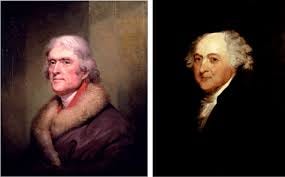
On July 4th, 1826, 50 years to the day after they signed the Declaration of Independence, John Adams and Thomas Jefferson died within a few hours of each other.
It’s an almost too-weird turn of fate that has always fascinated me.
Adams and Jefferson were friends who became enemies, then friends again.
They served on the five-man committee that drafted the Declaration, although Adams and the others deferred to Jefferson’s powerful pen.
Under President George Washington, Adams was Vice President and Jefferson, Secretary of State.
Their friendship endured growing divisions over the national government’s powers versus states’ powers.
They stayed friends even after the 1796 presidential election, which Adams won by just three electoral votes over Jefferson. As runner-up, Jefferson served as Adams’ Vice President.
But they became political enemies over the next four years, when bitter partisan divisions and vitriolically partisan newspapers stoked differences.
Sound familiar?
In 1800, Jefferson defeated Adams for the Presidency, and the two men then went over 10 years without speaking or writing to each other.
Mutual friends helped renew their friendship in 1811. From then until they died, they exchanged warm letters about books, their families, their shared past and current events.
The two could hardly have been more different.
Jefferson was from Virginia; Adams, from Massachusetts.
Jefferson was tall and loose-limbed. Adams was short and stubby.
Jefferson had a relaxed reserve about him. Adams could be pompous and stiff.
Jefferson thought farmers were the bedrock of America. Adams believed craftsmen, tradesmen and manufacturers were the future.
Jefferson loved all things France, including the French Revolution. Adams was partial to England.
Jefferson’s wife died young; he never remarried. Adams’ wife Abigail was a strong-minded, outspoken force of her own.
Jefferson was a slaveowner. Adams was one of the few Founding Fathers who didn’t own slaves; he wasn’t an abolitionist, though he favored gradual emancipation.
Jefferson was founder of the Democratic Party. Adams was a Federalist.
Jefferson championed a populist people’s democracy; Adams feared democracy could become mob rule.
They represented two traditions that forged one country.
They espoused two philosophies that animate political debate even today.
They helped launch our great ship on its daunting voyage.
Fifty years after they pledged “our Lives, our Fortunes, and our sacred Honor” to America’s independence, the two old friends-enemies-friends died on the same day.
Adams’ last words were “Thomas Jefferson survives.”
He didn’t know that Jefferson had died hours before.
Let’s celebrate their Bicentennial with our own pledge to overcome today’s divisions and bring America together again.
Subscribe to Gary's substack posts