A lot of trust. Little verifying
Published January 8, 2026
By Tom Campbell
Were you as disturbed as I to learn that our state lottery revenues have increased by $3 billion over the past three years while the percentage of proceeds contributed to our public schools had declined from 23 percent in fiscal year 2023, 20 percent in 2024 and 16 percent in 2025?
Disturbed, but not surprised.
Return with me to 2005. Virginia and South Carolina had lotteries; carloads were reportedly driving north and south of our borders to purchase lottery tickets. Lottery fever raged. North Carolina was reportedly losing millions of dollars in revenues because we didn’t have the games. And come on, the proceeds from the games were to go to public schools - The North Carolina Education Lottery.
Opponents were vocal. Pastors and religious leaders were perhaps the loudest. Gambling is gambling, they said. Gambling may not be one of the seven deadly sins, but it is cousin to them.
I will never forget the April afternoon we learned that a lottery vote was going to be held in our State House. My Methodist preacher wife, Lib, insisted that we march down to the legislature to do what we could to block its passage. Finding a parking spot was all but impossible; we walked more than a mile to get to the legislature.
Who should we meet when entering the building but Bill Owens, a longtime friend from Elizabeth City and the manager for the bill in the House. Lib walked up to Owens and told him her opposition. Her coup de grace was when she said, “Bill, your daddy would be disappointed in you.” Owens’ dad had been the longtime Chief of Police in Elizabeth City, an old-fashioned law and order lawman. Owens wasn’t fazed.
Lottery opponents argued this was a poorly disguised ruse; advocates and lobbyists just wanted us to get in the gambling business. Lottery funds would merely supplant current education funding, not supplement them. And those who could least afford it would spend funds for tickets instead of buying food for their families.
The Bill passed the House 61-59 and went to the Senate. Senate President Pro Tem Marc Basnight, knowing the Senate vote would be close, took no action until two key opponents, one on his honeymoon and the other sick in bed, were absent. Then he called for a vote. The electronic tote board in the chamber showed a tie – 24-24. Lt. Governor Bev Perdue, in her capacity as chief presiding officer of that body was called upon to break the tie. She voted in favor.
“I did what I thought was right,” Perdue said. Some months later, she came under criticism when, as an early act of her gubernatorial administration, she transferred about $120 million in funds from the lottery to help balance the state budget, ailing because of the 2008 housing crisis recession. Those funds were later replaced.
Tracing all the dollars that go into k-12 education is difficult, said Dr. Terry Stoops, longtime education studies director of the John Locke Foundation. All the funding goes into a pool, and it is difficult to identify general fund dollars from lottery funds.
But here’s what we can isolate. In 2002, before the lottery, 65.1 percent of the state budget was devoted to k-12 public education. By 2010, four years after the first scratch-off games, that percentage had dropped to 60.1 percent and was reported at 39 percent in 2014. During that same time the state budget rose from $14.3 billion in 2002, to $24.6 billion in 2020 and $29.7 billion in 2024.
The dollars may have increased but the percentage of the budget dedicated to k-12 education has decreased dramatically.
For reasons yet to be explained the recent performance audit was the first conducted since 2008.
Ronald Reagan often quoted the Russian proverb, “Trust but verify,” meaning that it was fine to put our trust in others, but it was essential that we check the facts and verify the results of that trust. North Carolina has failed to verify for an unbelievable 17 years.
The NC Education Lottery is an independent, self-supporting and revenue-raising agency of the state. It is governed by a nine-member appointed board and both raises and spends billions of dollars on prizes, salaries, advertising and we don’t know what else but it is clearly less and less on education.
North Carolina has essentially given this agency carte blanche to function pretty much as it chooses. It has a fiduciary responsibility to each citizen of our state. More oversight and accountability are needed.
The issue takes on even more significance when you realize this board just recently was made responsible for the regulation and oversight of sports betting, including issuing licenses to wagering operators and suppliers, adopting and enforcing gaming regulations, monitoring compliance with operating and advertising standards and investigating potential violators.
Trust but verify!
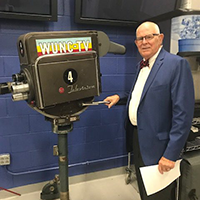
Tom Campbell is a Hall of Fame North Carolina broadcaster and columnist who has covered North Carolina public policy issues since 1965. Contact him at tomcamp@ncspin.com