The healthcare election
Published February 5, 2026
By Tom Campbell
What’s the number one issue concerning people right now? Yes, folks are concerned with pocketbook issues like the price of groceries, housing and utilities and some are concerned with immigration, but KFF (the Kaiser Family Foundation) has just released a nationwide poll reporting that people say the issue that will most affect their votes come November is the increased costs of healthcare.
When congress finally passed a stopgap measure to end the 43-day federal government budget shutdown last November, the bill did not include provisions to extend or continue the tax credits reducing the cost of health insurance through the Affordable Care Act (ACA) marketplaces. It was the biggest issue, along with Medicaid funding, at the heart of the shutdown, but was disregarded.
As a result, premiums for some 24 million Americans (7.2 percent) with ACA marketplace insurance have more than doubled beginning in January, from $888 annually in 2025 to $1904. Interestingly, 77 percent of people facing these increases live in red states like North Carolina.
2 in 5 people are covered by government insurance - Medicare (19 percent) or Medicaid (17.6 percent). Another 54 percent are covered by employer sponsored insurance plans. Larger firms, those typically with 100 or more employees, pick up about 75 percent of the cost of their employees’ insurance premiums; the employee contributes 25 percent.
Over the past five years the premiums for family health coverage have increased by a whopping 26 percent, now amounting to some $27,000 annually and rising. To control cost increases, many insurance plans have raised employee out-of-pocket deductibles and co-pays.
A December Gallup poll further makes the case. 70 percent of those polled say the US Healthcare System is in a state of crisis. 81 percent of Democrats agree with that statement, while only 66 percent of Republicans and 64 percent of Independents concur the system is in crisis or has major problems.
It is obvious that healthcare and healthcare costs are on voters’ minds and promise to be a election issue in the November midterms.
I don’t pretend to be an election campaign strategist, but if I was working for a candidate here is some advice I would offer, especially to Democrats.
Stop constantly railing about what a terrible person Donald Trump is and what horrible things he is doing. It’s not working. About 40 percent of the electorate continues to support him – I can’t explain why, but they do. Like Trump said in 2016, he could kill somebody on Times Square in New York and get away with it.
Running against Trump is a losing hand.
Instead, my advice would be to find issues that concern large numbers of people, keep those issueds constantly present on the minds of voters and offer solutions to them. Healthcare looks like a winner.
My healthcare election strategy would begin with this question: Is healthcare a privilege or a right in this country? Is it something only rich people can afford or should all people be afforded basic healthcare?
Despite some rhetoric to the contrary, our country obviously thinks everyone is entitled to some basic healthcare. Consider the EMTALA act, a federal law passed in 1986. EMTALA, the Emergency Medical Treatment and Labor Act, states that any hospital accepting Medicare must treat anyone coming to their emergency department requesting evaluation or treatment. If they have an emergency condition the hospital must provide treatment, regardless of the patient’s ability to pay.
Now part of the imperative in passing the Affordable Care Act was that increasingly large numbers of patients without insurance were showing up to emergency rooms, overwhelming the ERs and slowing down healthcare delivery for other patients needing urgent care.
ACA and Medicaid expansion allowed large numbers to obtain health insurance, thereby establishing relationships with a care provider. When our state finally decided to expand Medicaid, some 600,000 citizens obtained health insurance, taking pressure off our overcrowded emergency rooms.
That care has now been eliminated or restricted by three things. First, the inaction of congress to restore the tax credits of the ACA marketplace. Additionally, while the full impact of the $1 billion in cuts to Medicaid in the Big Beautiful Bill are still unknown, there’s no question those cuts are going to have huge impacts on healthcare in our state.
And third, since our legislature has failed to pass a budget for this current year that started July 1, we face large deficits in the amount the state needs to pay its share of Medicaid costs, forcing our department of Health and Human Services to cut the reimbursement amounts they pay to care providers by 3 percent. This cut in revenues will undoubtedly reduce the number of care providers available and the quality of care being provided.
If you were a candidate do you think you could make healthcare, especially healthcare costs, a significant campaign issue? Seems like a winner to me!
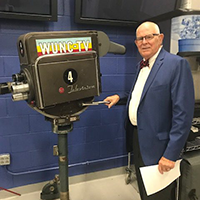
Tom Campbell is a Hall of Fame North Carolina broadcaster and columnist who has covered North Carolina public policy issues since 1965. Contact him at tomcamp@carolinabroadcasting.com