About teen takeovers
Published July 16, 2026
By Tom Campbell
Can you remember what you did in those Lazy Hazy Crazy Days of Summer when school was out? In my day, school ended just before Memorial Day and started up again after Labor Day; we had nearly three months off.
Some of my friends worked helping farmers harvest their tobacco crops. Some found part-time jobs with local merchants. Some attended camps. A few got jobs working in municipal recreation departments offering summer programs. But mostly it was unstructured down time.
When my children were teens in the 80’s, many got jobs in fast food restaurants, grocery stores and other places. Jobs in tobacco had dwindled drastically; besides, few were willing to do such hot, sweaty work.
Around July 4th it was not uncommon to hear kids moaning about being bored. My wise wife always handled these complaints by telling our children that boredom was a personal problem, and they were the only ones who could solve it. If they couldn’t, she promised to find plenty of chores to occupy them.
Recently we have experienced Teen Takeover events in North Charleston, South Carolina, as well as in Charlotte, Greenville, Winston-Salem, and Raleigh.
Boredom and social media are generally the genesis for the teen takeover events. The word goes out on social media of a big event taking place, usually late at night, urging young people to come join for fun and community.
In Raleigh, the turnout was surprising. Some 8,000 young people showed up in the Glenwood South business district known for restaurants, bars and entertainment venues. At first all was well. Yes, it was noisy and blocked traffic, but as the pitch of enthusiasm increased, fueled by alcohol and drugs, the mood turned. Shots were fired and mayhem ensued.
“Unruly, undisciplined, and unsupervised,” was the way Raleigh Chief of Police Rico Cicero Boyce described the event. There were 6 shooting incidents in which 9 people were injured. 29 young teens were arrested and 18 older young adults were charged. 11 firearms were seized.
A large number of those in attendance were under 20 years of age and, as was the case elsewhere, the event didn’t even begin until later at night (after 9 p.m.). Police say most of those in attendance came from communities outside Raleigh.
Let’s acknowledge that the vast majority of the attendants didn’t go hoping for violence or even pervasive drunkenness. Most just wanted to have a good time and let off some steam, but they were present when agitators (who may have been the ones promoting the takeover event to begin with) started turning the event into violence.
I don’t know about you, but I had a curfew growing up. Mother always said, “there’s nothing going on in the streets of this town after 11 o’clock you need to be a part of.” I suspect curfews went out of existence about the same time as straight shift cars disappeared. And in the “old days” most venues closed around midnight; today they are just cranking up at that hour.
The common refrain being heard in response to these teen takeover events is for cities and towns to impose curfews on young people, but I’m not sure how effectively that would solve the problem. Think of the logistic problems. How is an officer to know how old a person is without checking licenses or birth certificates and face it, many underage kids have fake IDs. How many officers will need to be diverted from other duties to control places like Glenwood South? Even young children have rights.
And if you shut down a location, where are the kids going to go? We certainly don’t have many venues or programs for them; most cities and counties have cut back or cut out any efforts for activities for young people. Once upon a time churches hosted events, but most churches have neither the resources nor the membership to do so now.
At some point the accusatory finger will point to the parents. “Why don’t you supervise your children better,” people will ask? Parents do have some responsibility in these scenarios, and it doesn’t appear that parents are spending as much time teaching accountability and morality to the young as they once did. Even if they are, today’s parents have less control over their children than in previous times. You are considered an adult by age 18 and will be rewarded or penalized accordingly.
Social media has more influence on most young people than does their parents, teachers or even law enforcement officials. We need to convince our young (and everyone else) not to believe or trust everything they read and hear from social media. It can be a force for good, but also one for evil.
We need real world solutions for new world problems.
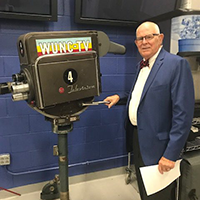
Tom Campbell is a Hall of Fame North Carolina broadcaster and columnist who has covered North Carolina public policy issues since 1965. Contact him at tomcamp@ncspin.com