32 years of kicking the Leandro can... and still kicking
Published April 9, 2026
By Tom Campbell
Longtime readers are probably going to gag on their granola when they read what I say next.
The North Carolina Supreme Court was right in their verdict about the Leandro Plan. It is not the duty or even right of our courts to dictate what and how much is appropriated for education. Our constitution is very clear about separation of powers. The appropriation of funds is the task of our General Assembly alone.
The Leandro saga has been kicked down the road since 1994 and we’re still kicking that can today. Allow me to summarize.
The original lawsuit was filed in May 1994, when 5 counties (Hoke, Halifax, Robeson, Vance and Cumberland) said their students were not getting as good an education as wealthier counties and wanted the state to help rectify that situation. It wasn’t until July 1997 before the NC Supreme Court ruled that our constitution decreed that every child was guaranteed access to a “sound basic education.” The court assigned Judge Howdy Manning to judge if the state was meeting that obligation.
In April of 2002, Manning ruled the state was not meeting this requirement, saying every classroom should have a “caring, qualified teacher,” and every school have “sufficient resources and be led by a competent principal.” In July 2004, the Supreme Court agreed with Manning, ruling that the state’s efforts were inadequate, but they left to lawmakers and educators how to remedy the situation.
The back and forth arguing, discussing and pontificating continued until Judge Manning had to retire for health reasons and Judge David Lee was assigned the case in October 2016.
In July 2017 the two sides agreed (legislators and educators) agreed to seek an independent consultant to study the issues and make recommendations. West Ed, the independent consultant retained, presented its findings in December 2019. The discussing and disputing continued until 2021, when a frustrated Lee sought a “declaratory relief” necessary to implement what became known as the “Leandro Plan” and ordered the State Budget Director to fund years 2 and 3 of that plan.
Lee was immediately labeled a “rogue judge” by the Republican-led legislature and a series of subsequent court cases saw Lee’s order dismissed, upheld, and dismissed again. Earlier this month the Supreme Court threw out the case and the plan.
We asked former Supreme Court Justice Bob Orr how we should properly read the ruling. The Leandro Plan, as a case is over, Orr said. However, Leandro “as a constitutional right to an opportunity for a sound basic education,” lives on.
After all these years we have come full circle to 1997, when Burley Mitchell’s Supreme Court first ruled on the “sound basic education” constitutional guarantee.
It is blatantly obvious our legislature doesn’t even wish to attempt to fulfill this mandate. They are like the man standing in front of a wood stove, saying, “give me heat, then I will feed you some wood,” unwilling and/or unable to provide funding, yet all the while telling us that our public schools are failing. Their only solution is to throw large sums ($675 million) for vouchers to private, religious schools attended by largely white, middle-income children.
Brace yourself for a whole new rash of lawsuits. The first question to be decided by the NC Supreme Court, now controlled 5-2 by Republicans, is whether to uphold or reverse the “sound basic education” guarantee.
Here’s what our North Carolina Constitution states about public education. In Article 1, section 15 the text reads, “The people have a right to the privilege of education, and it is the duty of the State to guard and maintain that right.”
Article IX, section 2 says, “The General Assembly shall provide by taxation and otherwise for a general and uniform system of free public school, which shall be maintained at least nine months in every year, and wherein equal opportunities shall be provided for all students.”
If the court affirms that every child should be guaranteed the opportunity to a sound basic education, the next questions are to answer whose responsibility is it to uphold that guarantee, what will be required to do so and what happens if that entity fails to uphold that responsibility? These are essentially the questions first asked in 1994.
The most obvious response is to change the faces in our General Assembly and replace them with persons who pledge to uphold Leandro (the right), lawmakers who will ensure public schools are properly funded, staffed by qualified educators, and held responsible for attaining those goals.
In November we will elect all 170 members of the General Assembly. It is not too early to stake them out about Leandro. Will they vote to ensure our children have access to a sound basic education? Don’t accept less than a yes or no answer.
It’s time to stop this childish game of kick the can.
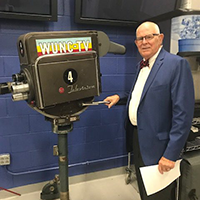
Tom Campbell is a Hall of Fame North Carolina broadcaster and columnist who has covered North Carolina public policy issues since 1965. Contact him at tomcamp@ncspin.com