Thank you, Senator Berger
Published March 26, 2026
By Tom Campbell
North Carolina experienced two political earthquakes in March. The first, on March 3rd, revealed that North Carolina’s most powerful politician, Phil Berger trailed in his primary reelection. Polls had teased such an upset was possible, but few believed Berger would lose.
Recounts determined that Sam Page’s 23-vote margin held. The second quake shook the state Tuesday - Senator Berger announced he would concede the election and congratulated Sheriff Page.
It couldn’t have been easy for Berger. The same district that had elected and reelected him for years turned on him. Give Berger credit and thanks for upholding the finest of North Carolina election traditions, where losers graciously accept defeat.
Berger could have fought, but he knew that prolonged appeals rarely result in the outcome being overturned. He may have lost but he wasn’t a sore loser.
Some place the blame for the loss on Berger’s attempts to locate a gambling casino in Rockingham County. It was a boneheaded move for the most powerful politician in our state. Berger became a pawn for big money gambling interests lining his campaign coffers without taking the time to consult with his constituents to find out how they felt.
But the casino issue was really just a straw horse for the real reason he lost. Phil had gotten, as my mother was fond of saying, “too big for his britches.” Voters believed he had stayed too long, no longer represented their best interests and wanted a change.
The Senator still has work to do. The short session of the General Assembly meets next month and lawmakers are under intense pressure to finally get a state budget passed. With elections coming in November, Republicans have been getting an earful from voters about their failure to do their jobs.
Berger’s insistence that the legislature carry out more personal income tax cuts has been a stumbling block to budget passage. The House balked because of consensus revenue projections predicting a financial cliff if revenues are cut further from the budget. Berger disagreed with that forecast. But just this week the forecast was updated, giving a somewhat cloudy estimation of coming revenues. Regardless whose data you accept, the budget needs passing, and Berger doesn’t need the distraction of his election hanging over lawmakers as they make decisions.
It is far too soon to give a full accounting of Phil Berger’s legacy. It will no doubt come soon, but we went back to notes, scripts from our previous TV shows and even sought help from The Google in trying to point out some highlights of Berger’s leadership.
Without question the biggest accomplishment was stabilizing accountability in state finances, even getting voters to approve a constitutional amendment requiring local and state budgets be balanced at the end of each fiscal year. State spending was reined in and revenue surpluses became common; the “rainy day fund” has grown to billions of dollars.
Berger and Republicans never met a tax they didn’t want to cut. In 2011, when Republicans took control of state government the joint personal income tax rate was a flat $1,700 plus 15 percent of everything over $17,000. Today that rate is 3.99 percent and corporate income taxes have been cut to almost zero.
The second most prevalent topic of the Berger era was power – who had it, who should have it and how to control it. Unquestionably, his leadership will be marked for the further accumulation of legislative power and the diminishment of power for the governor, especially in making key appointments. Lawmakers also tightened controls over local governments, including telling our 100 sheriffs they had to cooperate with ICE. Authority to conduct abortions was limited
Under Berger’s leadership the legislature passed HB2, the “bathroom bill” that brought scorn and embarrassment to our state. It finally went away. After refusing for years, Berger finally agreed to allow Medicaid expansion in our state in 2023, giving 600,000 citizens health insurance.
Lawmakers delved deeply into politics, taking control of the State Board of Elections from the governor, declaring that all judicial candidates must list their political party affiliation, and Republicans took gerrymandering to an art form, making it highly difficult for Democrats to compete competitively in congressional and legislative elections.
But the most lasting change under Berger’s leadership involved education. Early on, he and lawmakers overhauled the UNC Board of Governors, turning it into a partisan political mouthpiece. They did away with DEI. Phil led the Senate in the school choice movement that essentially just gave up on traditional public schools, not only encouraging more charter schools but in instituting “Opportunity Scholarships,” aka vouchers, to children to attend private schools. In September that funding will amount to $675 million.
The Phil Berger era comes to a close in January. Regardless of whether you applauded or condemned his leadership he gave a quarter century to service in our state and deserves its thanks.
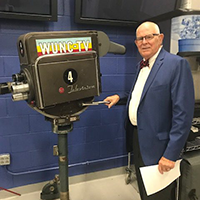
Tom Campbell is a Hall of Fame North Carolina broadcaster and columnist who has covered North Carolina public policy issues since 1965. Contact him at tomcamp@ncspin.com