Budget framework is flawed
Published May 21, 2026
By Tom Campbell
Legislative observers who were eager to learn how Senate President Pro Tem Phil Berger would function during the legislative short session - his last - may have gotten answers to their questions in the joint announcement that the House and Senate had reached a “framework agreement” on key points of a new budget. Once again, it appears that Berger pretty much got his way.
We say appears because there was nothing more than the announcement on key points. We’re told the full budget won’t be forthcoming until June and there’s no telling what bad ideas will make their way into that document. But we got enough from the May 5th press conference to say that as things now stand it doesn’t look promising.
Whoop de doo! Lawmakers finally agreed to give teachers and state employees pay raises. Last year, negotiations stalled when the House proposed a 2.5 percent increase for state employees and an 8.7 percent hike for teachers. The Senate had wanted a 1.25 percent increase for state employees with bonuses over the two years and 2.3 percent raises for teachers, again with bonuses each year. The “framework” calls for state employees to get a 3 percent raise and teachers an 8 percent boost.
When you factor in the cost of inflation over the three years since the last pay increases and the almost hidden revelation that raises would not be paid retrospectively (as is usually the case) but instead would be prospective, meaning increases would only begin in the coming July 1 budget year, the proposals aren’t good enough. Teachers and State employees are rightfully grumbling about them. Lawmakers had to make employee pay more attractive because of the increasingly large number of vacancies in vital state positions
Then there is the income tax issue. A major conflict erupted last year over personal income tax rates after the consensus revenue projections from the Office of State Budget and Management and the legislature’s Fiscal Research staff projected a budget deficit if personal tax rates were cut further. Senator Berger boldly stated he didn’t think the projections were accurate. Turns out Phil Berger was correct. The latest estimates, released last week, indicate that because of increased personal income tax collections, capital gains taxes, and strong corporate income taxes the General Fund revenues will grow by 3.3 percent and should generate an increase of $713 million for the year.
Lawmakers must have had some advance warning of these new projections when they agreed to allow further decrease personal income tax rates. Beginning July 1, the current 3.99 percent rate will be decreased to 3.49 percent and will further drop to 3.45 percent in 2030-32. That’s great news for all of us who pay income taxes, but armed with these positive projections, legislators then ventured into dangerous ground.
They caved into a longtime Berger desire to put a constitutional amendment on the November ballot to cap NC personal income tax rates at 3.5 percent. Currently the cap is 7 percent, a more reasonable ceiling. This is nothing but a run-on bill, a measure lawmakers know that voters will eagerly turn out and vote for. But here’s the problem. When we passed the current 7 percent constitutional amendment cap, we had several years’ experience with tax rates lower than 7 percent. We don’t have that experience now.
While we hope it doesn’t happen, past history shows that sooner or later our robust economy will stumble. How will state leaders generate the revenues needed to keep state functions running if their hands are constitutionally tied? Will they cut vital services? Will they be forced to increase other taxes? Or will they borrow money to pay the bills? It is lousy governance to put future leaders in a box.
But if this amendment is bad, the other three proposed amendments are worse. One would guarantee that North Carolina is a “right to work” state, something that isn’t being challenged or needed. Another would guarantee a person’s right to farm. And the worst of them all would put a cap on property tax increases our municipal governments can pass.
Property taxes have become a burden for many citizens and there’s no question we need to have an open discussion about how best to meet local needs without sudden increases in property taxes. But once again we are tying the hands of city and county leaders and potentially forcing bad future decisions.
Constitutional amendments should be sparingly passed. Only 37 have been approved since 1971. None of these are necessary and are a shameless gimmick.
We haven’t seen what else might be included in the rest of the typical 600+ page two-year budget, but what we’ve learned so far isn’t a great omen. Lawmakers have had two years to get this right. They need to do better.
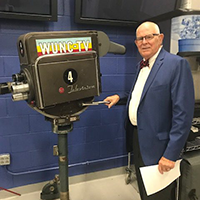
Tom Campbell is a Hall of Fame North Carolina broadcaster and columnist who has covered North Carolina public policy issues since 1965. Contact him at tomcamp@ncspin.com