Playing charades or choosing children?
Published December 18, 2025
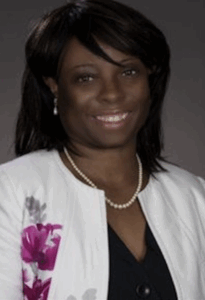
By Dr. Deanna Townsend-Smith
Dudley Flood Center for Educational Equity & Opportunity
In North Carolina, we are watching a disturbing choice play out in real time: Playing charades over prioritizing the public educational needs of children.
At a moment when students and districts are struggling under the weight of unmet needs, legislative theatrics and overreach have replaced responsible governance.1 The result is not just bad policy. It is a continued violation of our state’s constitutional promise and a squandered investment in our collective future.
The Leandro decision in 1997 made clear what our Constitution requires – that every child in North Carolina is entitled to a sound, basic education. Yet years later, the legislature continues to obstruct full implementation.2
This refusal is neither procedural nor abstract; it is a constitutional violation with measurable consequences. Schools remain underfunded, educators are leaving, students are falling behind, and communities – particularly rural and historically marginalized ones – are forced to absorb the damage.
When early literacy stalls, coursework narrows, and support staff disappear. Downstream effects show up in college remediation rates, workforce readiness gaps, and a talent pipeline that cannot meet the state’s economic needs.
Rather than addressing these failures, lawmakers have leaned into spectacle. Theatrics such as publicly throwing books are designed to distract, provoke, and dominate headlines – not to solve ever-growing problems.
These acts pull attention away from the legislature’s own failure to meet constitutional obligations and invest where returns are highest.
We cannot afford to be distracted. Justice requires focus, and sound economics demands the same. Sustained investment in children yields returns in graduation rates, postsecondary success, earnings, and civic participation.
Even more troubling is the legislature’s ongoing effort to usurp the authority of the State Board of Education.3 Our system of governance heavily relies on checks and balances for a reason. When lawmakers bypass or undermine the Board’s constitutional role, they destabilize oversight and blur accountability.
For legislators, this is not about protecting families; it is about consolidating power while deflecting responsibility at the expense of long-term outcomes for students and the state’s workforce.
As articulated in Fear Is Not Our Future,4 fear-driven policymaking distorts priorities and dehumanizes the people most impacted. When fear governs – fear of ideas, fear of history, fear of inclusion – our schools become battlegrounds rather than launchpads.
The cost is real, leading to diminished academic rigor, fractured trust, and students less prepared for college and careers. A state that claims to value competitiveness cannot undermine the very systems that produce skilled graduates.
Recent reporting has further revealed how these legislative actions strip schools of the ability to maintain dignity, respect, and well-being for all students.5
Schools are publicly chastised for compliance challenges while being denied the resources needed to succeed. This contradiction is not accidental; it shifts blame downward while power and decision-making move upward.
The absurdity would be laughable if the stakes were not so high.
You cannot sabotage public education and then express outrage at its struggles. You cannot demand adherence to rules while refusing to follow court orders yourself.
The erosion of public trust that follows has consequences beyond K–12. When families disengage, when educators leave, and when students internalize instability, the return on investment shrinks for individuals and for the state. Businesses feel it in hiring gaps. Colleges feel it in remediation. Communities feel it in stalled growth.
As we bring in 2026, let’s commit to a new year where the charades end and children are valued. Instead of throwing books that help children learn, let’s close the books on grandstanding and hold accountable those making decisions that harm students and communities.
At this moment, we must all ask a basic question: Who are our decisions truly serving and what return are we expecting? Our state and its 1.5 million public school students have waited long enough for equitable resources, constitutional compliance, and leadership rooted in dignity, respect, and justice.
North Carolina’s future depends on leaders who refuse distraction, advocate for justice, and choose children every time.
Dr. Deanna Townsend-Smith is the Senior Director at the Dudley Flood Center for Educational Equity and Opportunity. She has led transformative efforts across NorthCarolina and beyond as a teacher, mentor, new teacher coach, administrator, and school turnaround expert. She previously served as Director of Board Policy an Operations for the North Carolina State Board of Education.
1https://www.newsobserver.com/news/local/education/article313707831.html.
2https://www.newsobserver.com/news/politics-government/article313658005.html.
3https://www.ncleg.gov/Laws/Constitution/Article9.
4https://floodcenter.org/2024/fear-is-not-our-future/.
5https://www.wral.com/news/nccapitol/nc-chapel-hill-schools-parents-bill-of-rights-compliance-dec-2025/.